IMMERSIVE EXPERIENCES

Library of Congress

The Source: an experiential gallery where kids become researchers.

The Library of Congress holds more than 184 million items, the largest collection in the world. For most of its history, you needed a reader card to see them, and you had to be sixteen to get one. It is, at heart, a research institution. As the Library’s Shari Werb puts it, this is a place where people are “reading to learn, not learning to read.”

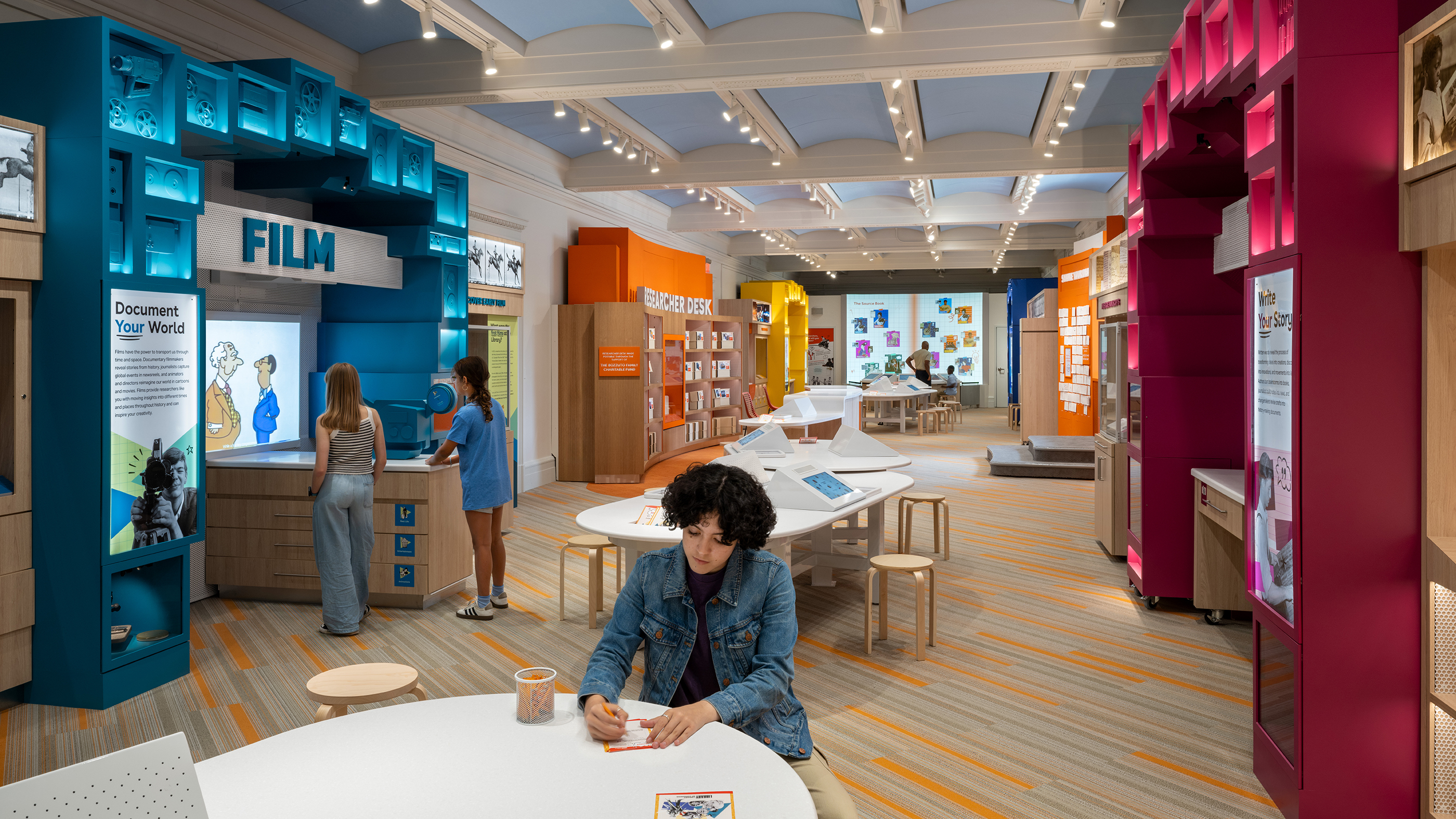
The idea for a gallery of their own began with a letter. A young boy wrote to the Librarian of Congress with a simple question: why did he have to wait years to explore somewhere that sounded so wonderful? The Library took it seriously and set out to build The Source, a 4,000-square-foot experiential gallery where kids ages 8 to 15 become researchers.

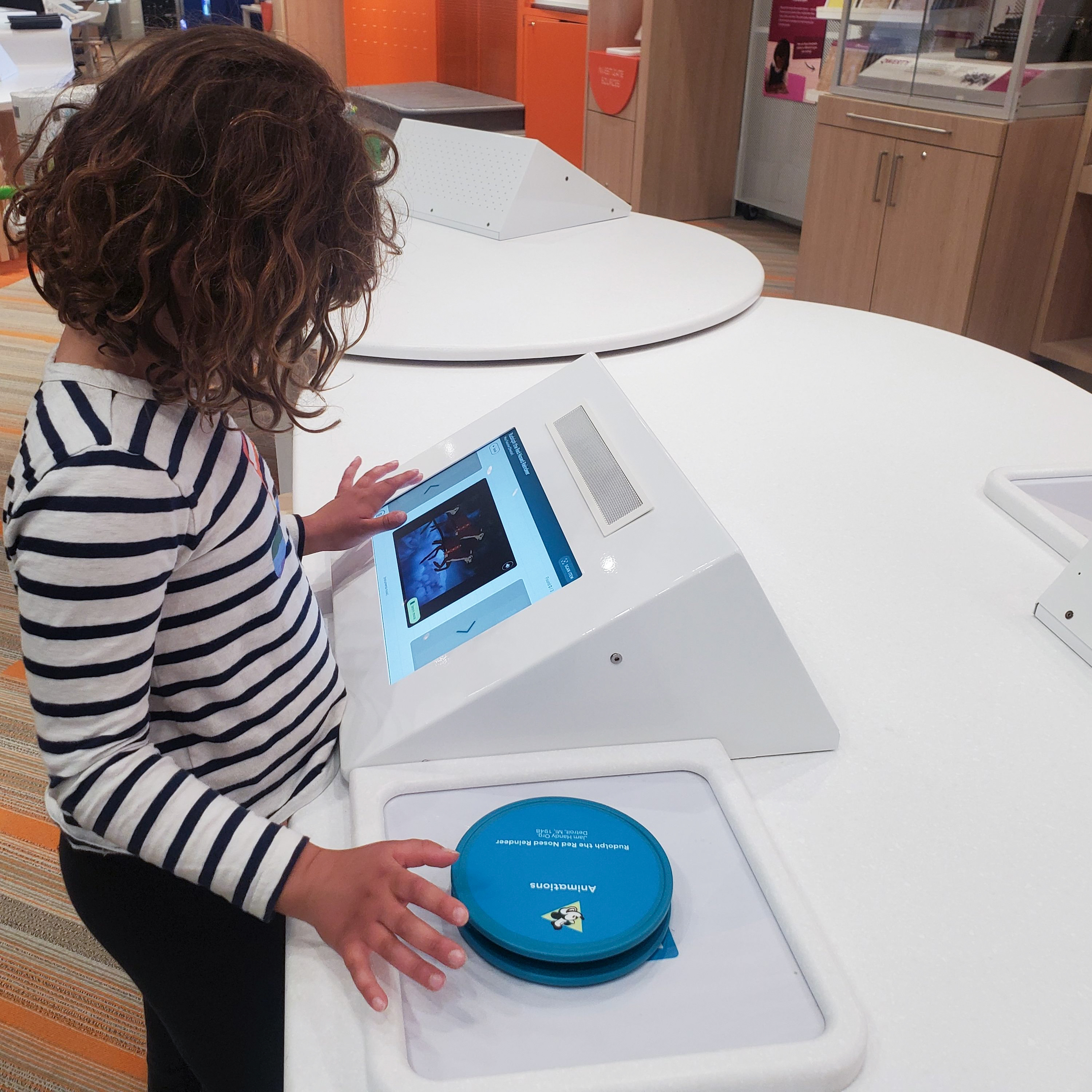
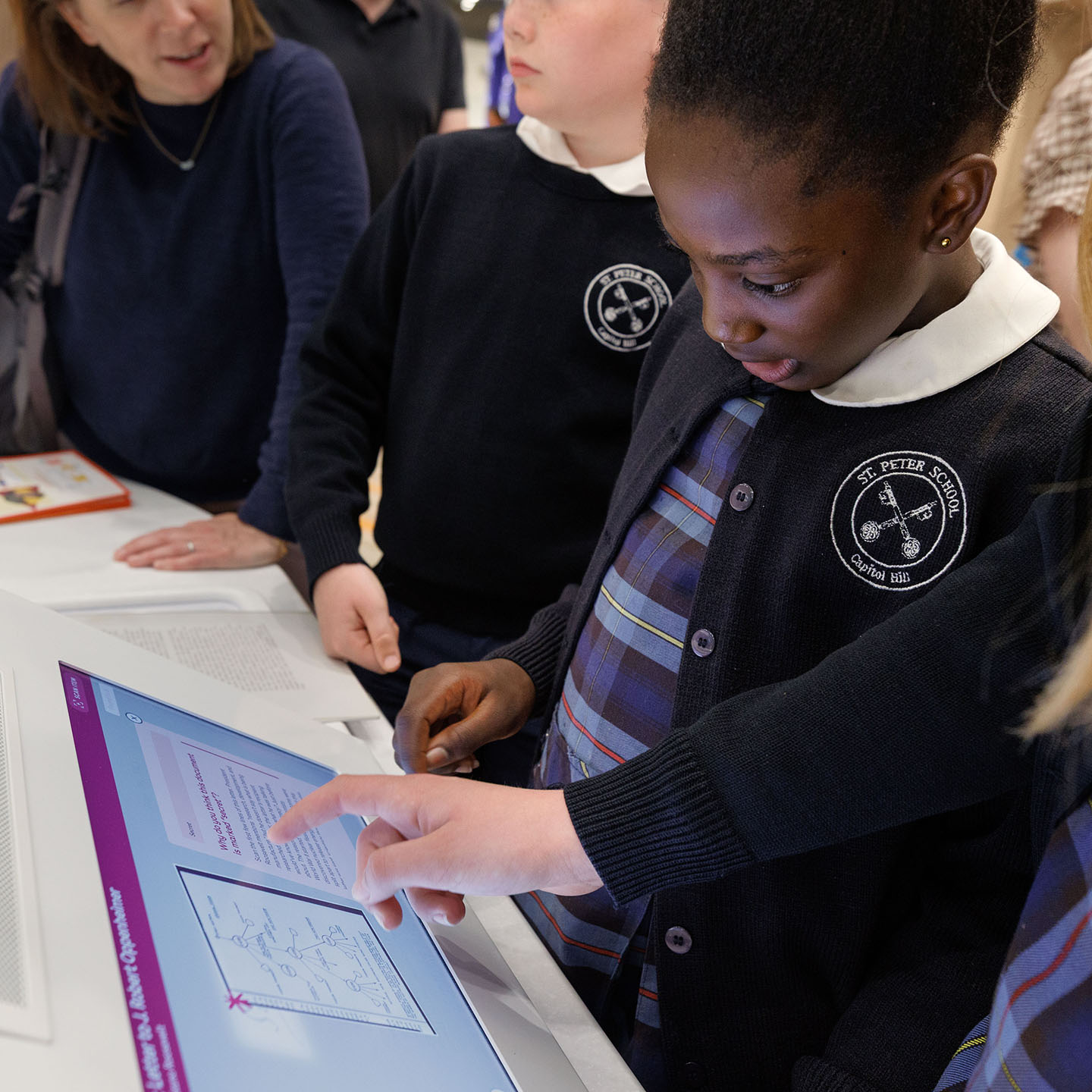
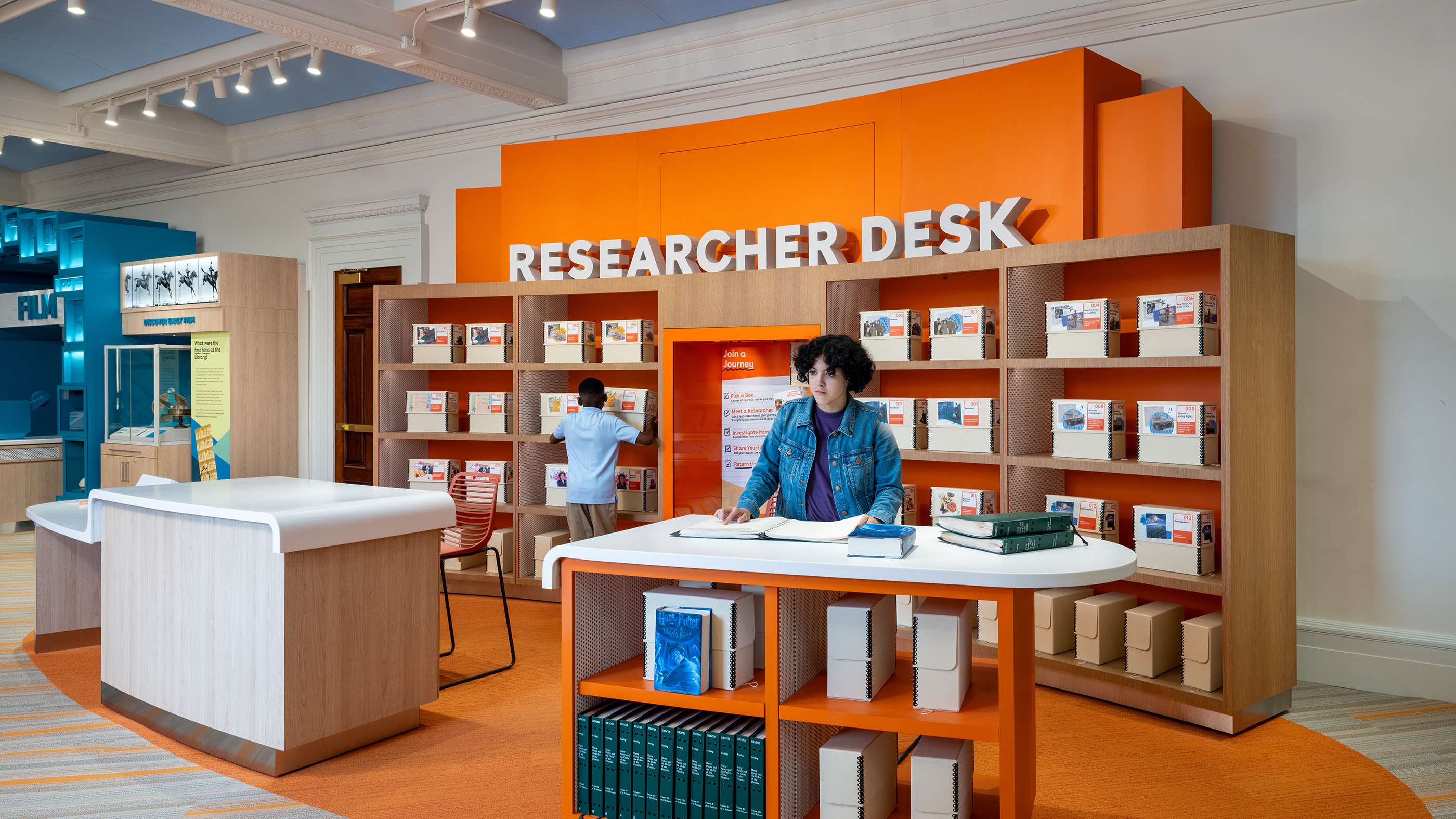
Hyperquake designed the digital experiences at the core of the gallery, working alongside SKOLNICK’s interpretive planning team. Our charge was a deceptively hard question: how do you turn a child into a researcher? The answer was to make research something kids do with their hands. We worked closely with the Library and tested every idea with real kids, then designed a set of physical-digital interactives that follow the Library’s own research process. A child picks up a real artifact, scans it, and its story opens up on a screen, ready to study the way a researcher in the reading room would.
OUR ROLE
Audience Research
Narrative & Storytelling
Physical-Digital Integration
2D/3D Motion Design/Animation
Systems Architecture & Software Engineering
Interactive Development & CMS
Sensor-Based Experiences & Projection Mapping
COLLABORATORS
SKOLNICK Architecture PLLC
David Freemas Cinematographer
Ron Blunt Photography
Goppion
Atomic
Available Light
200+
RFID-enabled objects kids can physically handle and scan
15
Investigation Stations across four zones
4K
square foot “experiential research gallery” for kids ages 8 to 15
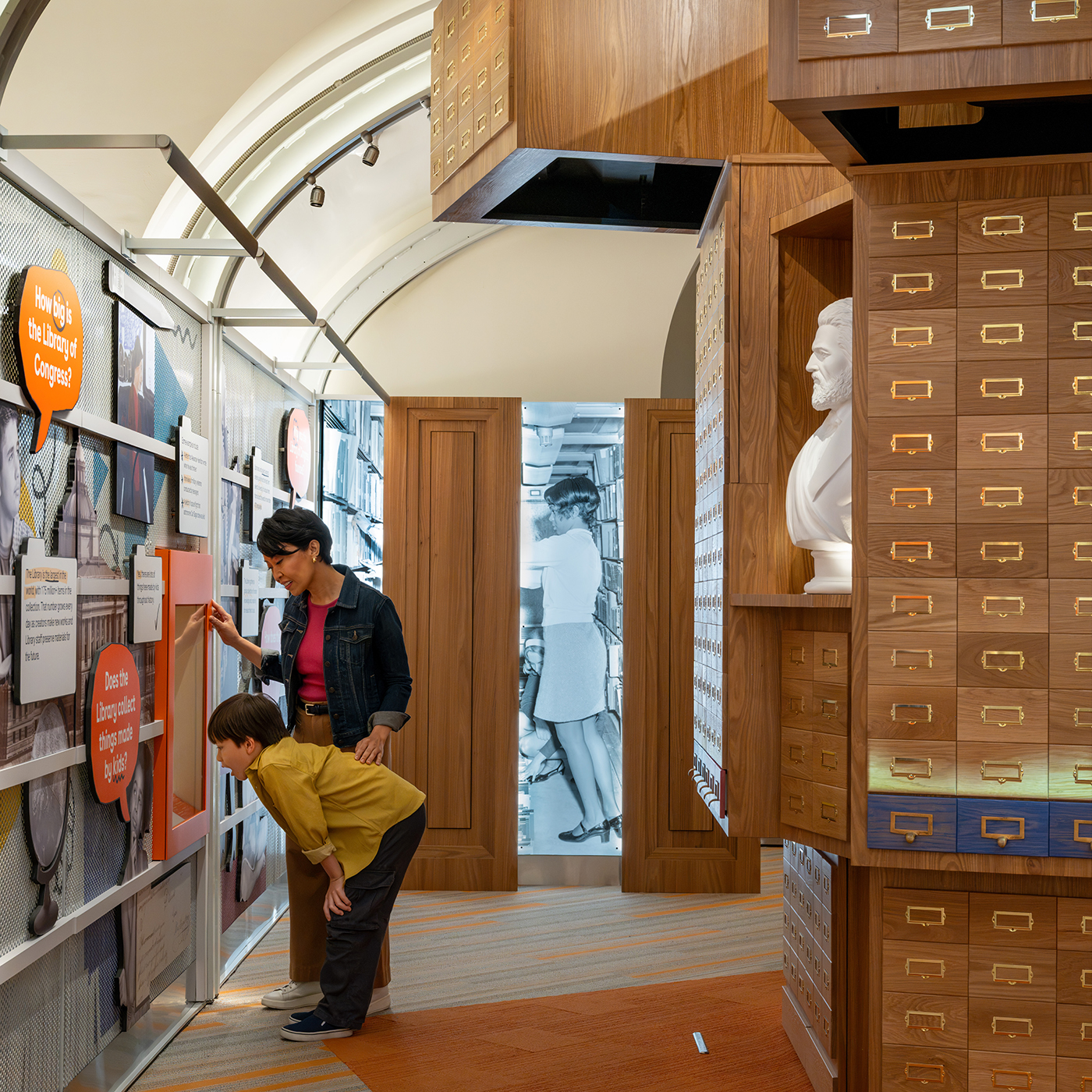
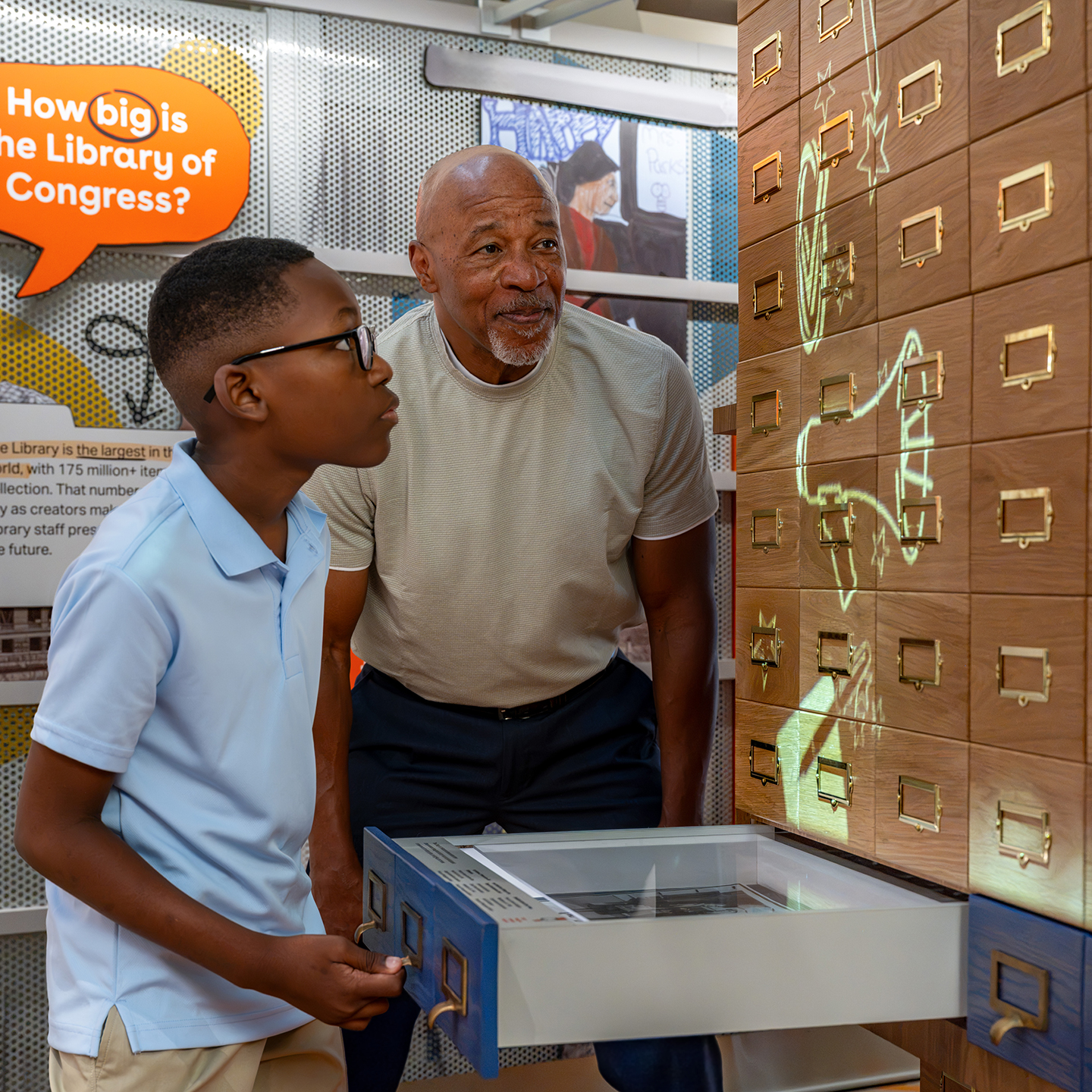
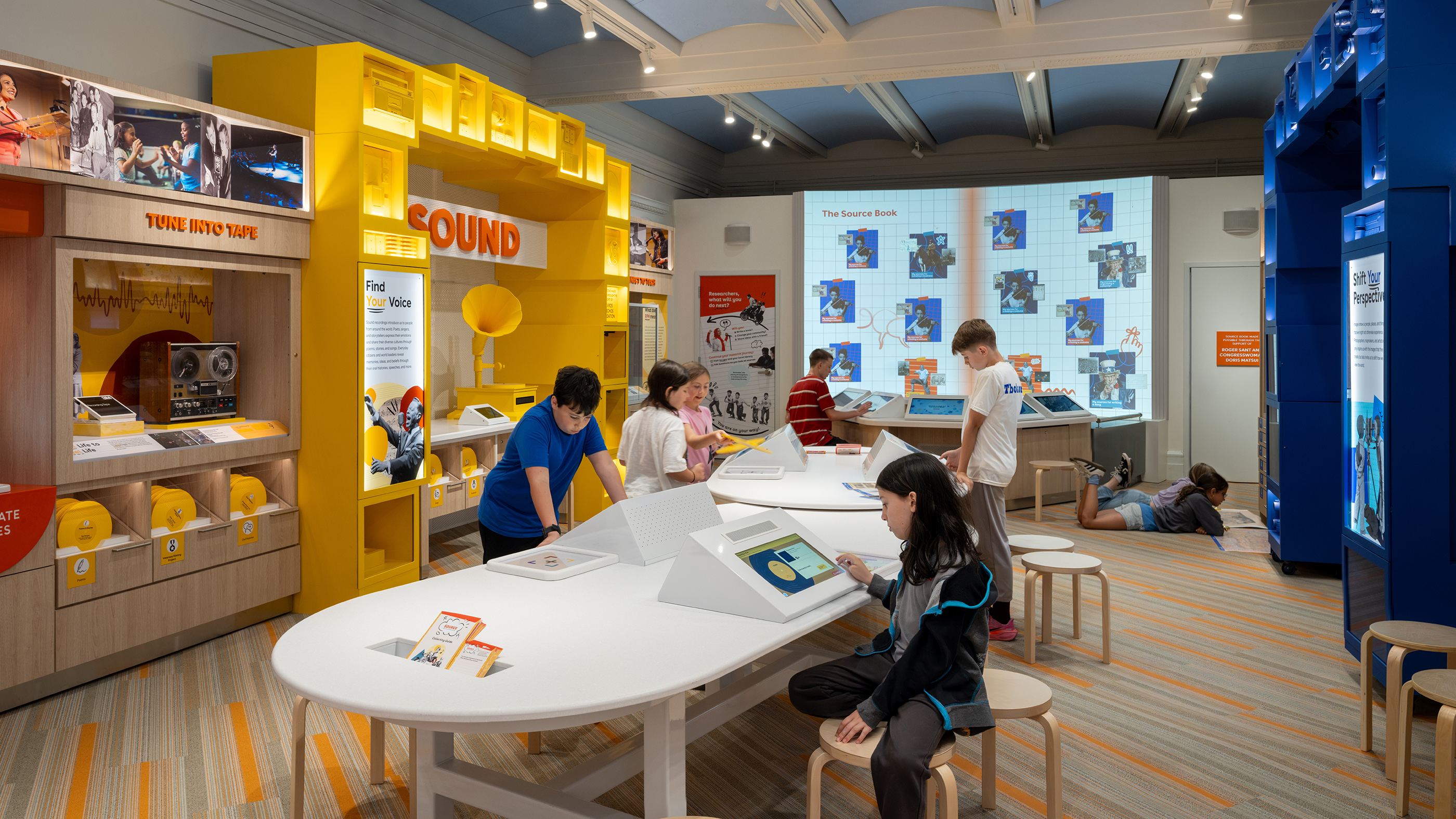
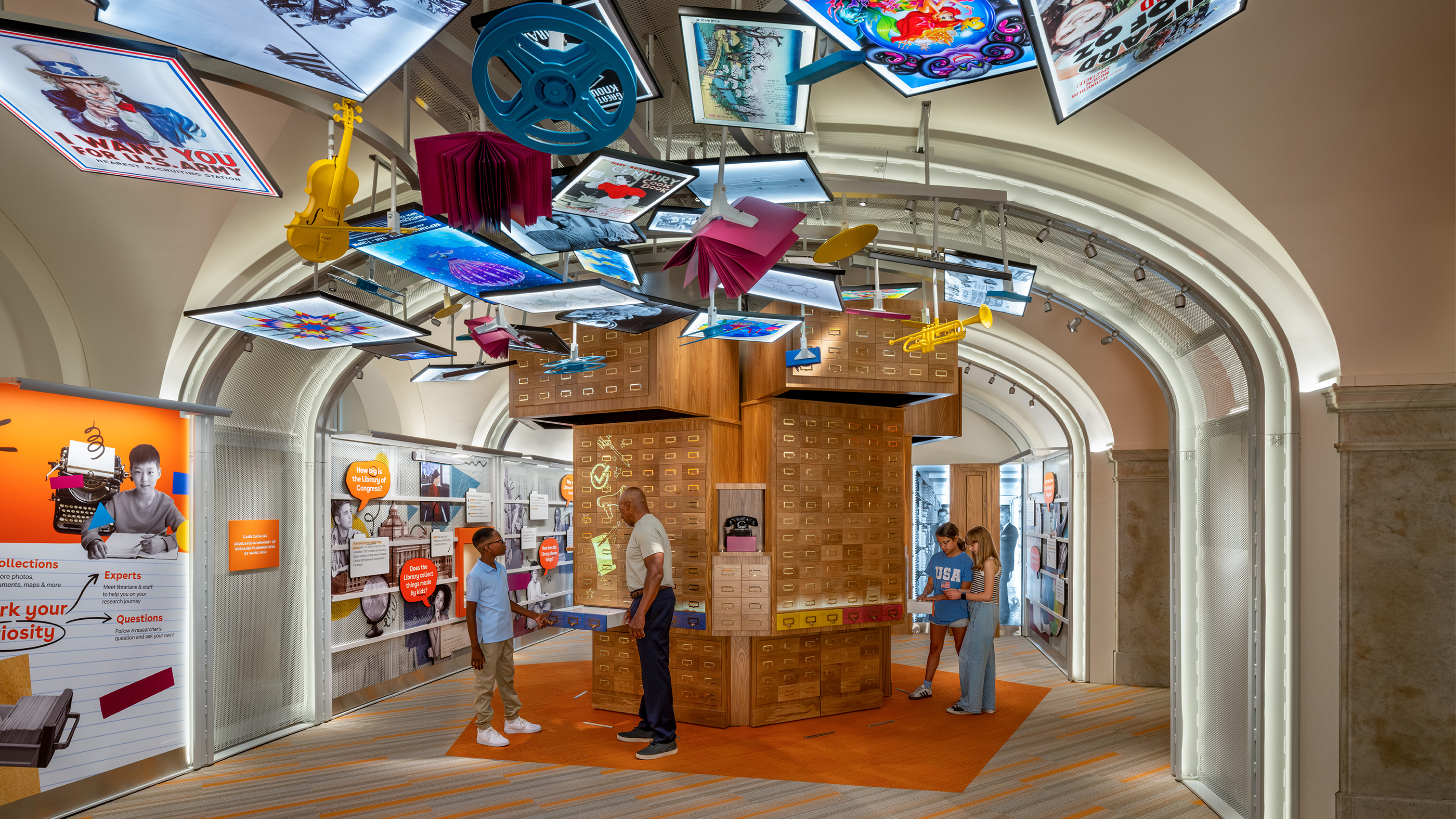
The first thing kids see is a whimsical giant card catalog. Open any drawer and the object inside appears to spill up the face of the structure in light and sound, with more objects tumbling from the ceiling above. Pull the drawer holding The Wizard of Oz and a tornado of books spins into the air. It’s nostalgia for the parents and pure magic for the kids, and it does the first thing any research has to do: spark the curiosity to keep going. We designed the projection-mapped animations and the custom audio that plays from every drawer.
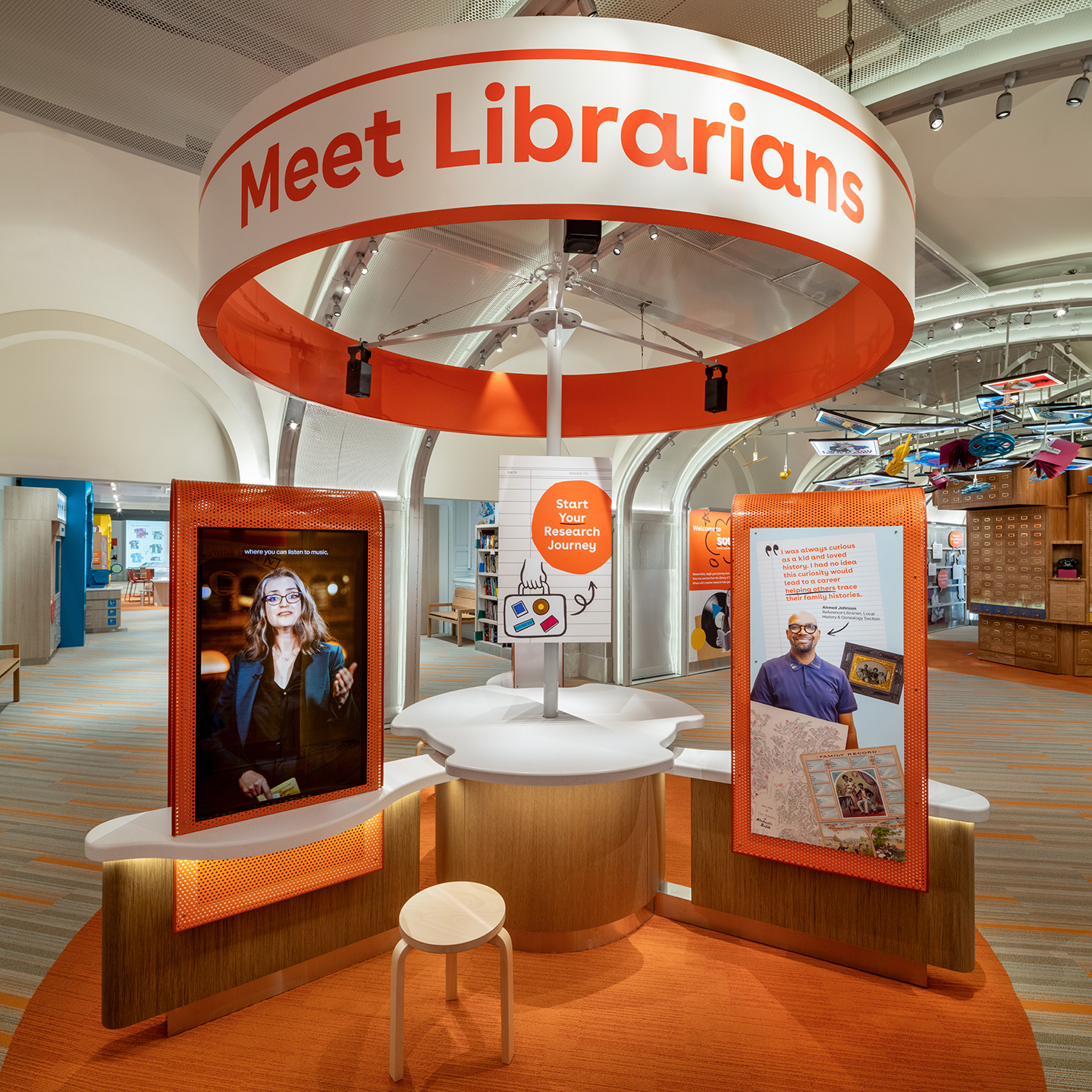
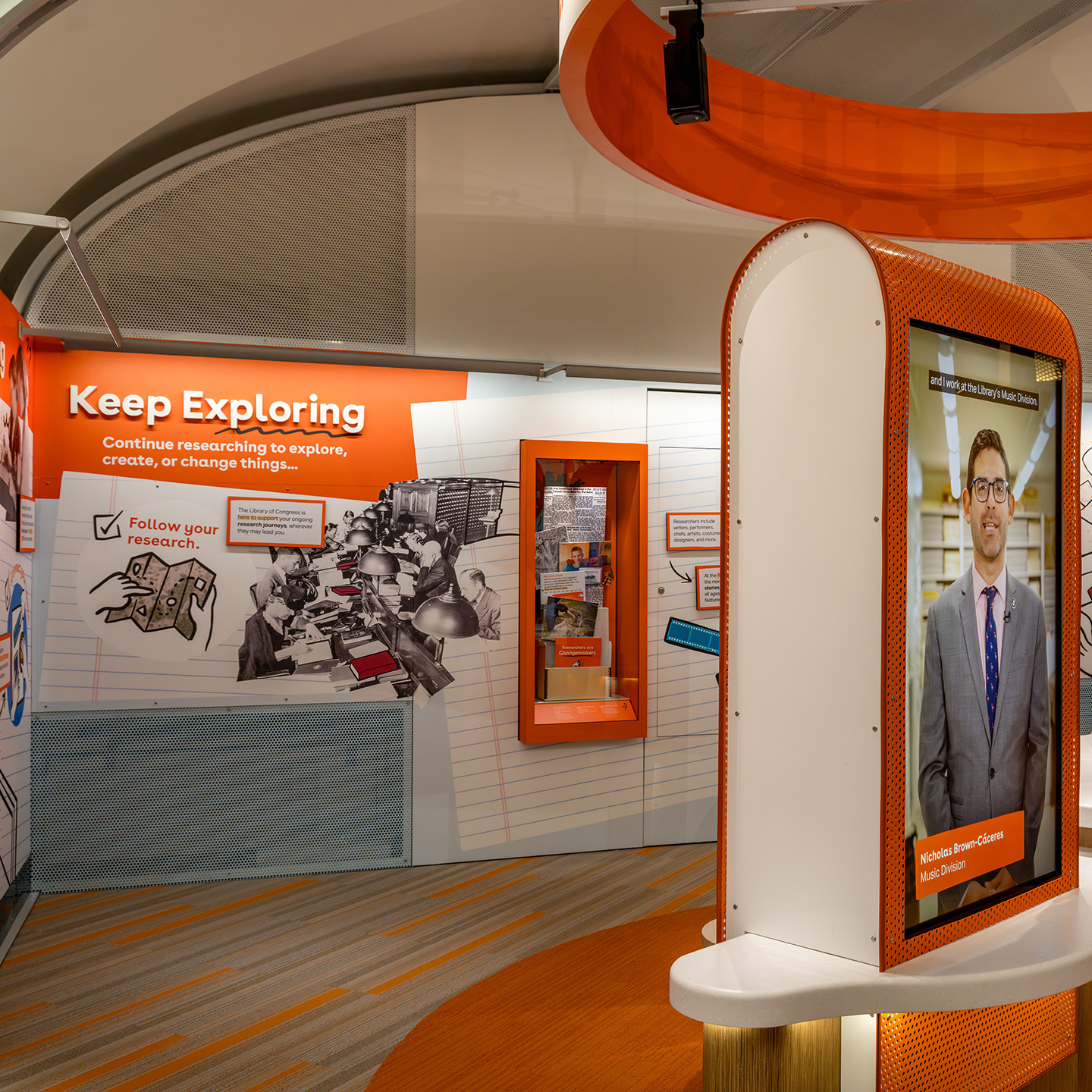
A real project at the Library starts with a reference interview, a conversation with a librarian who points you toward the right materials. We recreated that moment across three screens, where seven librarians from different divisions talk about what they do, then send kids off toward one of the four Collection Zones.

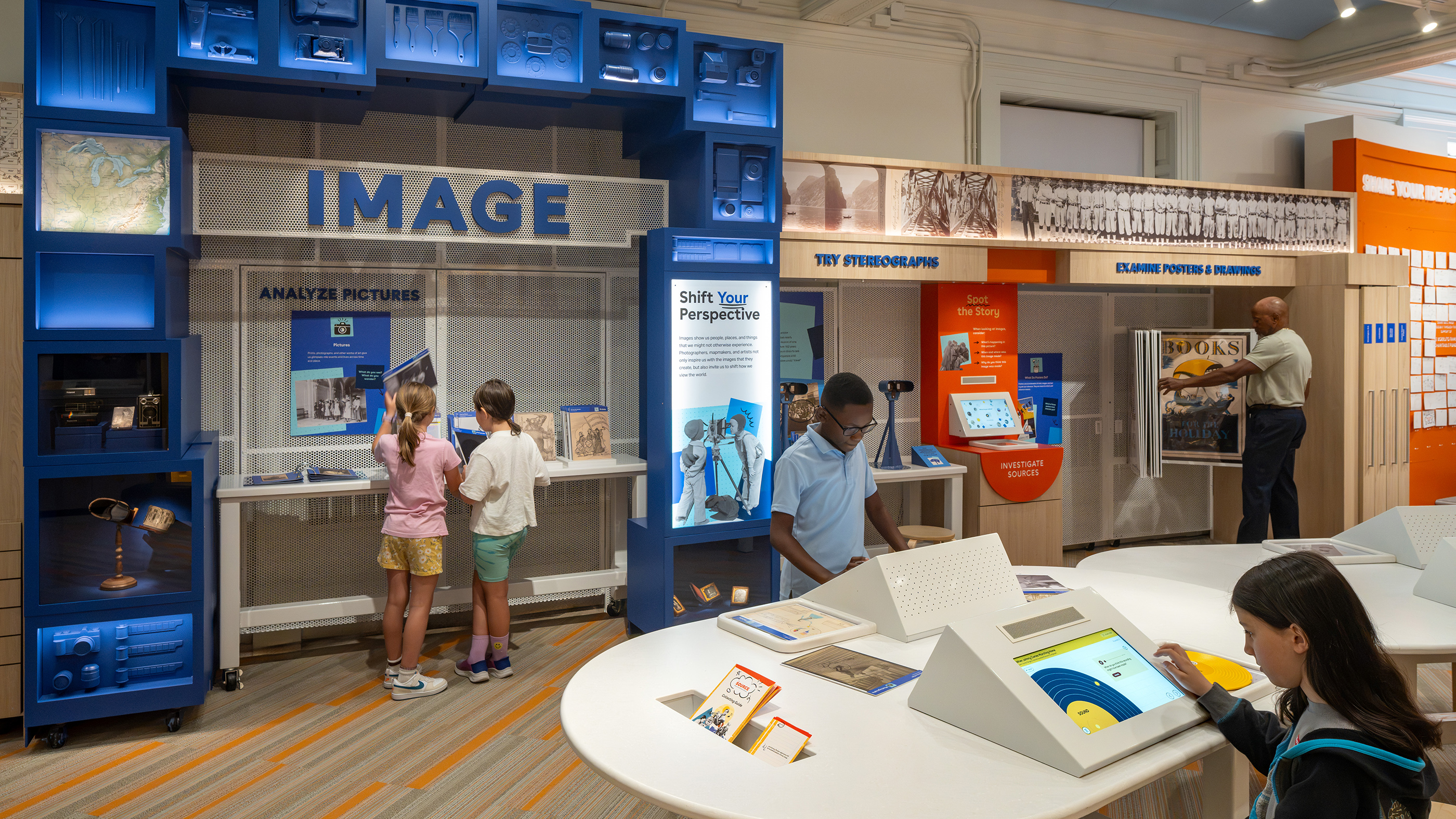
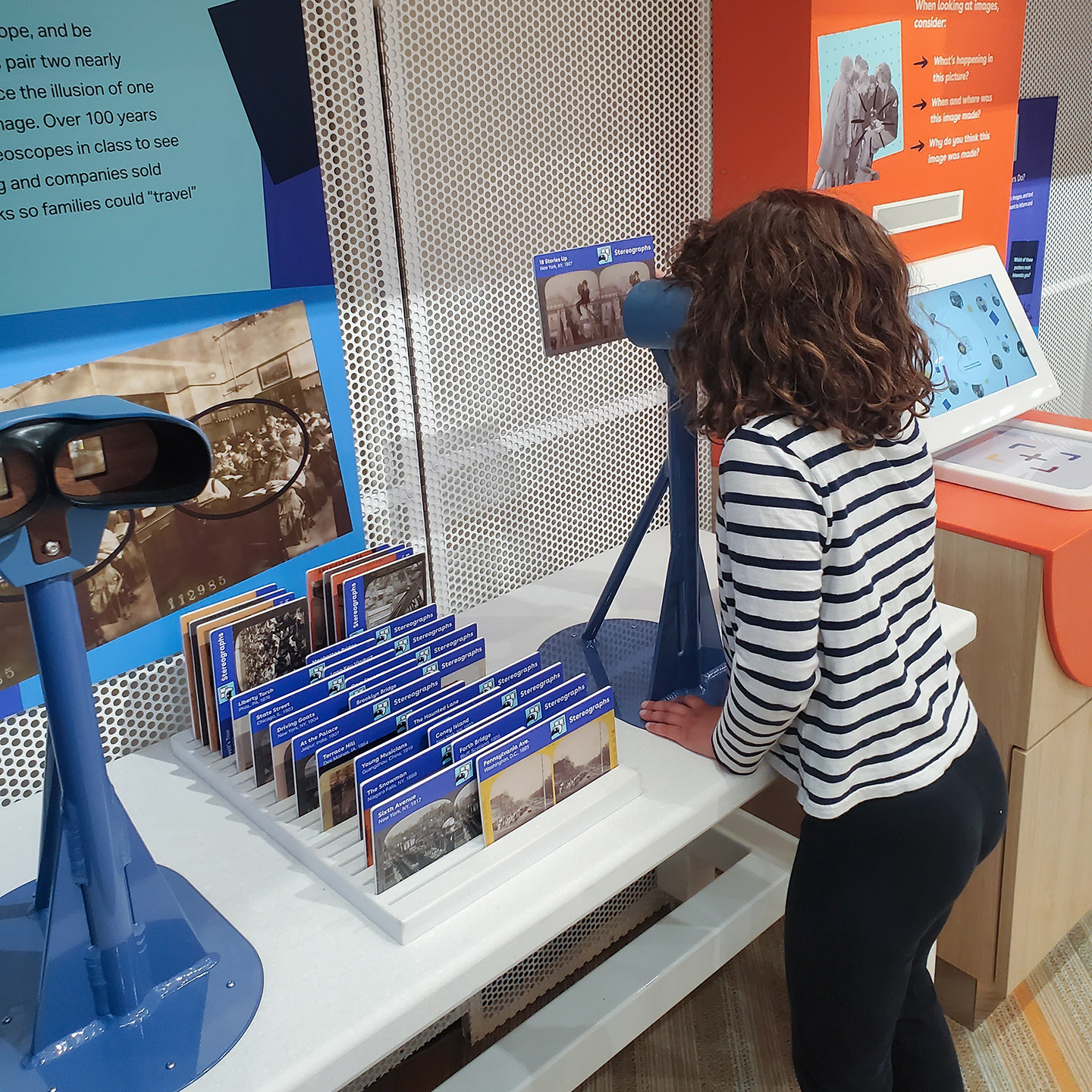
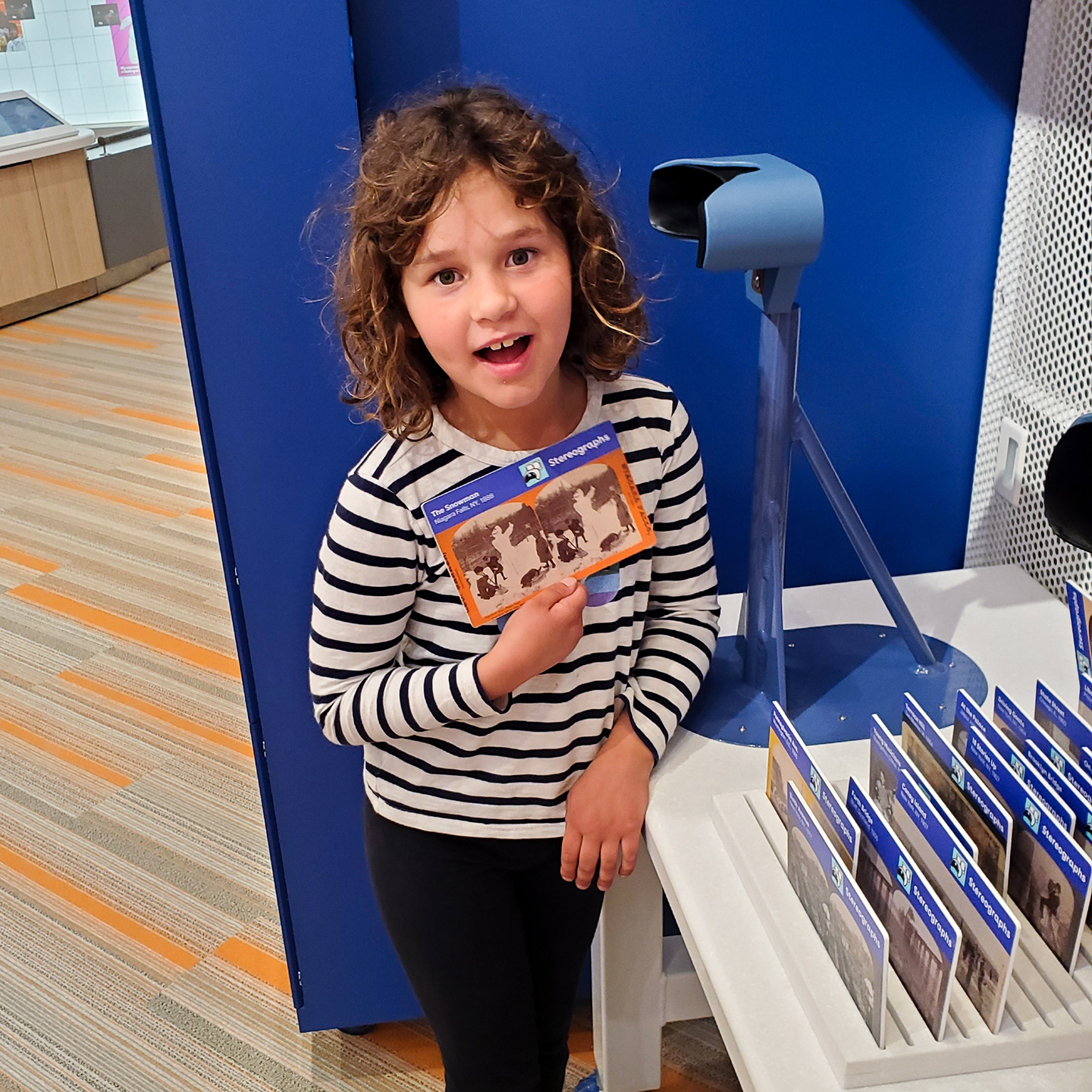
A playful, oversized replica of the tool that format was made for, built for quick discovery. And an Investigation Station, for slowing down to study one piece up close. We designed the digital replica tools and the investigation stations, along with every interaction inside them.
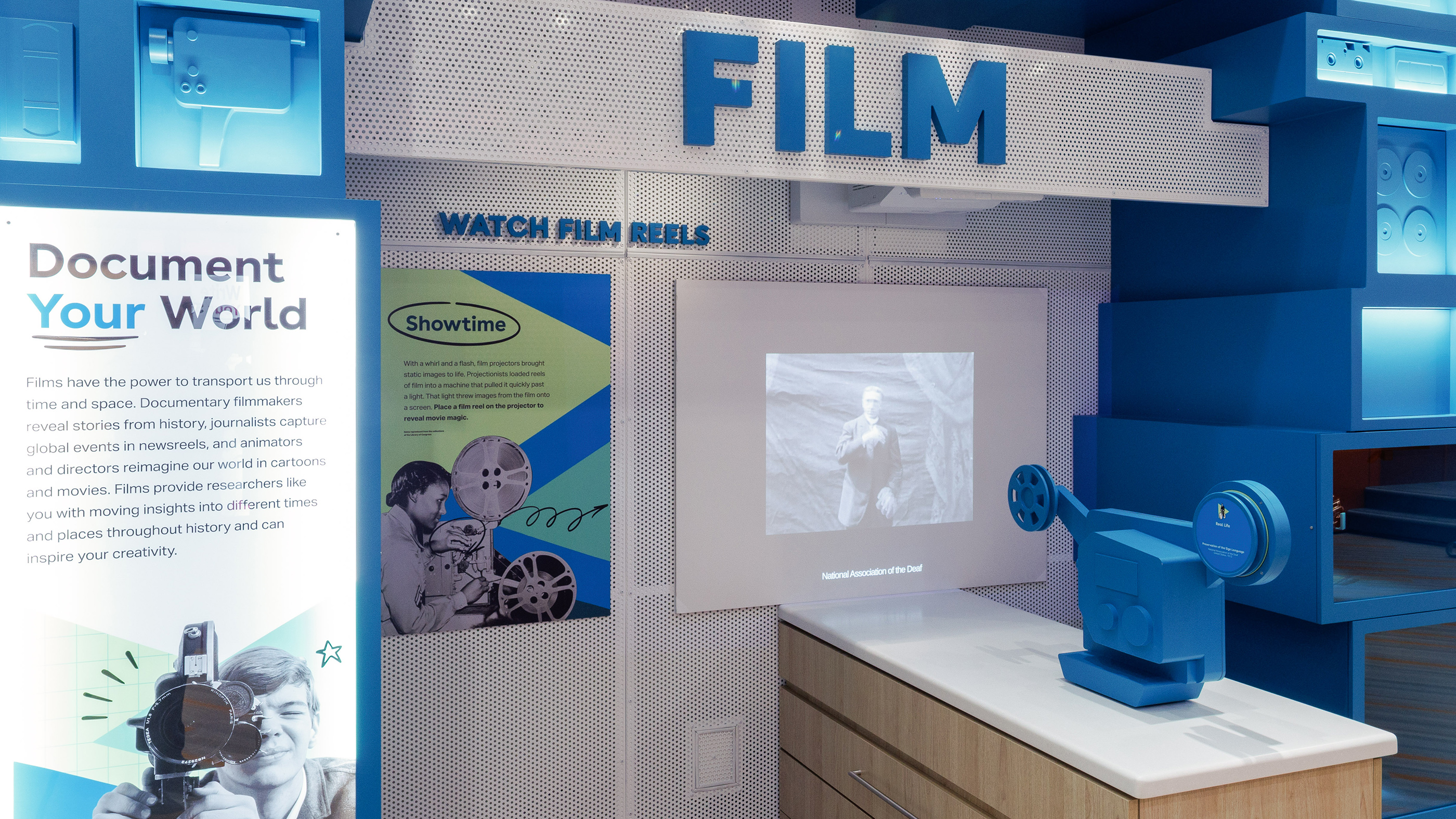
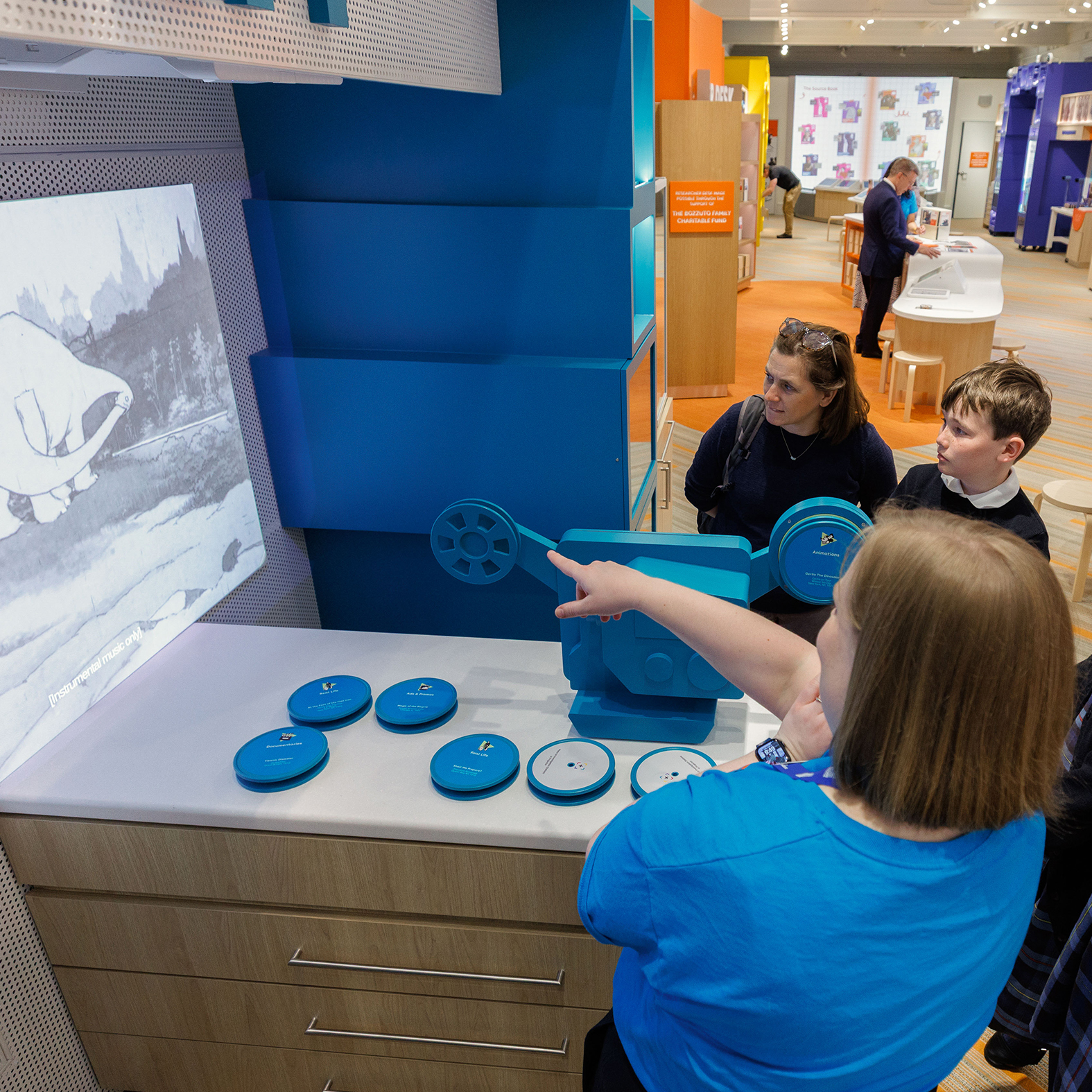
At the Film Collection Zone, kids can load a reel and a countdown ticks down before the clip plays: Gertie the Dinosaur, Babe Ruth swinging for the fences, Paris on the day it was liberated. At the Investigation Station, kids move through the footage frame by frame to catch what a single glance would miss.
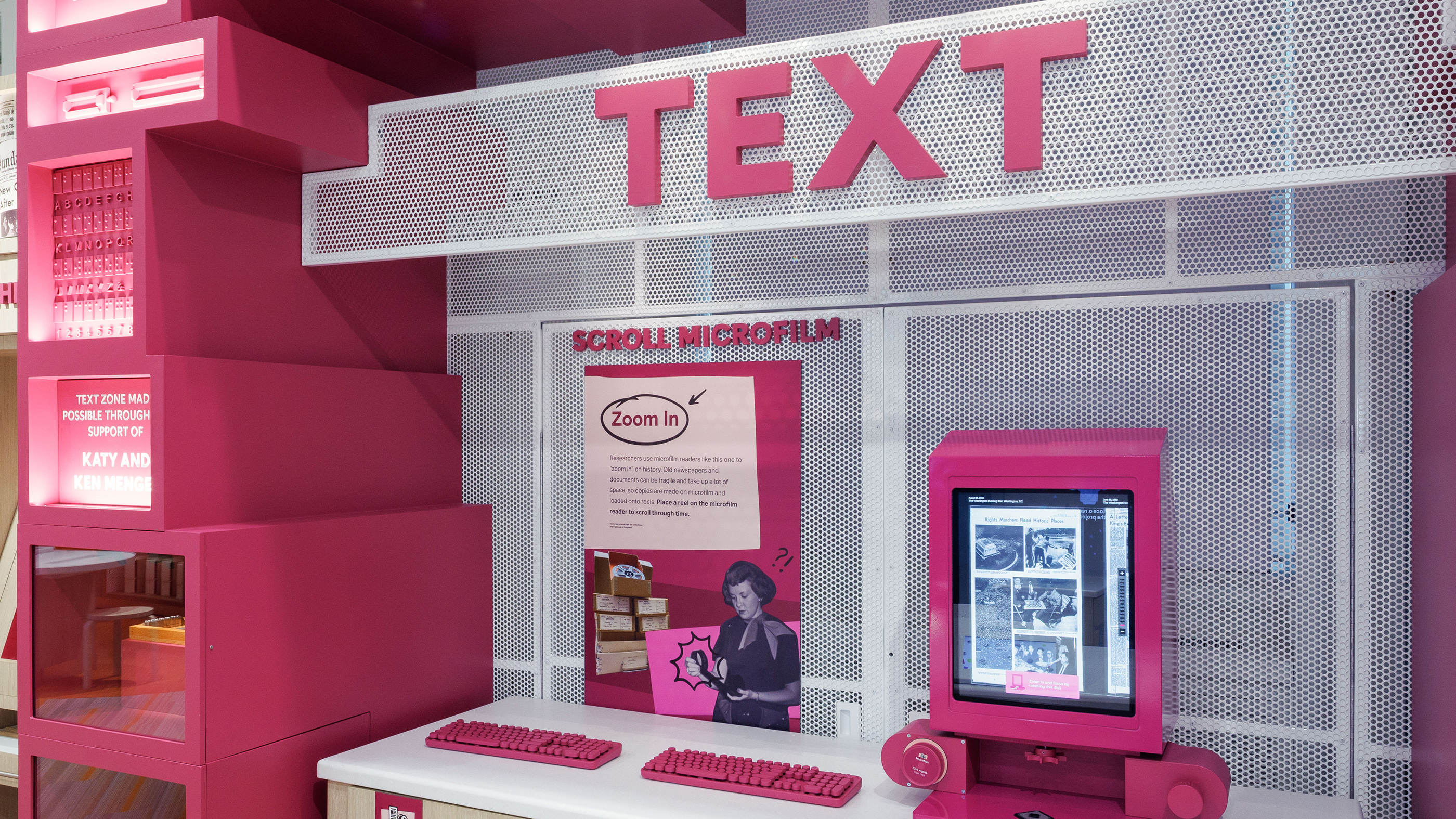
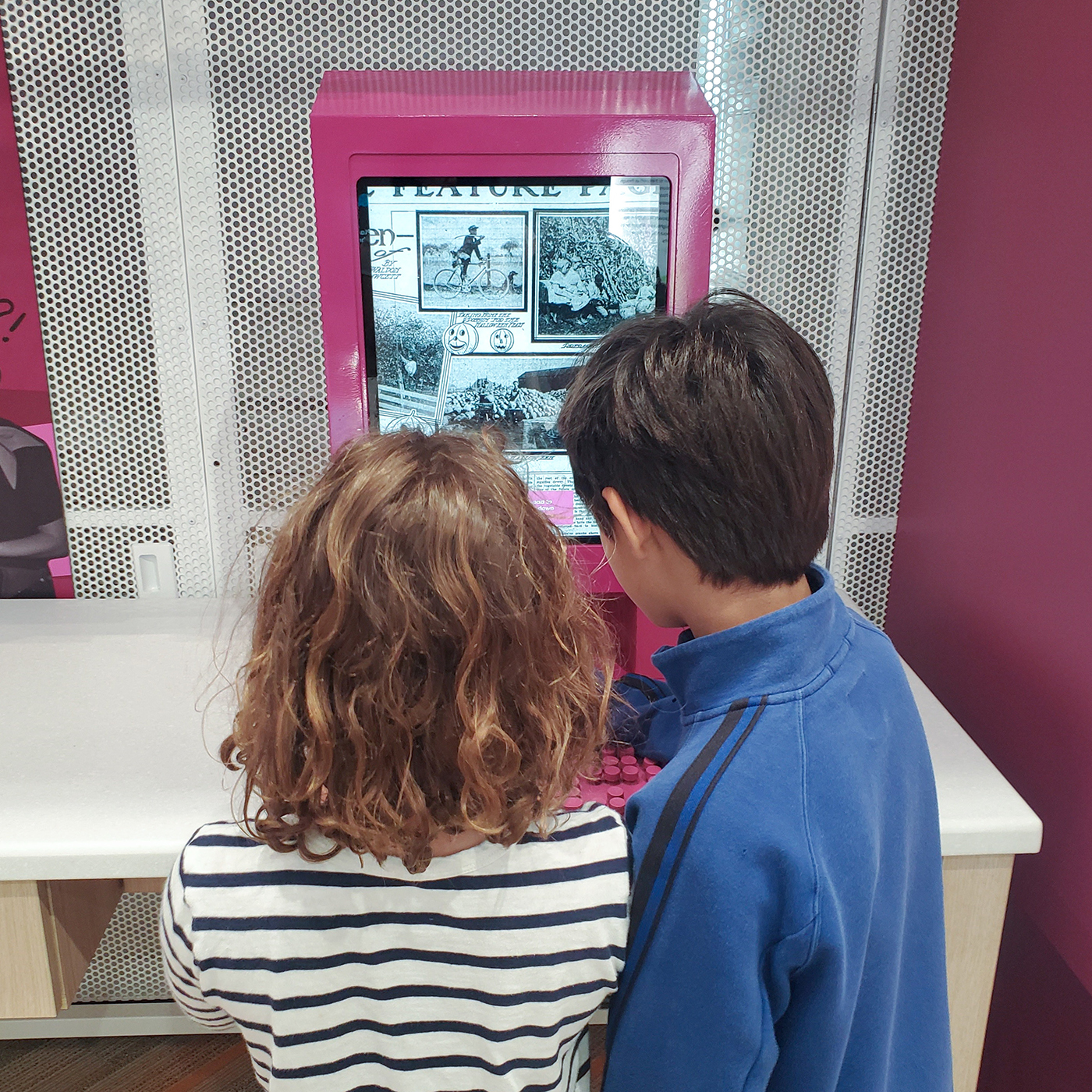
Kids load a reel of newspaper archives, then turn the dials to move through the pages and zoom in on the details: the sinking Titanic, the sports pages of a century ago. In study mode, a fingertip highlight surfaces notes written by the Library’s own experts.
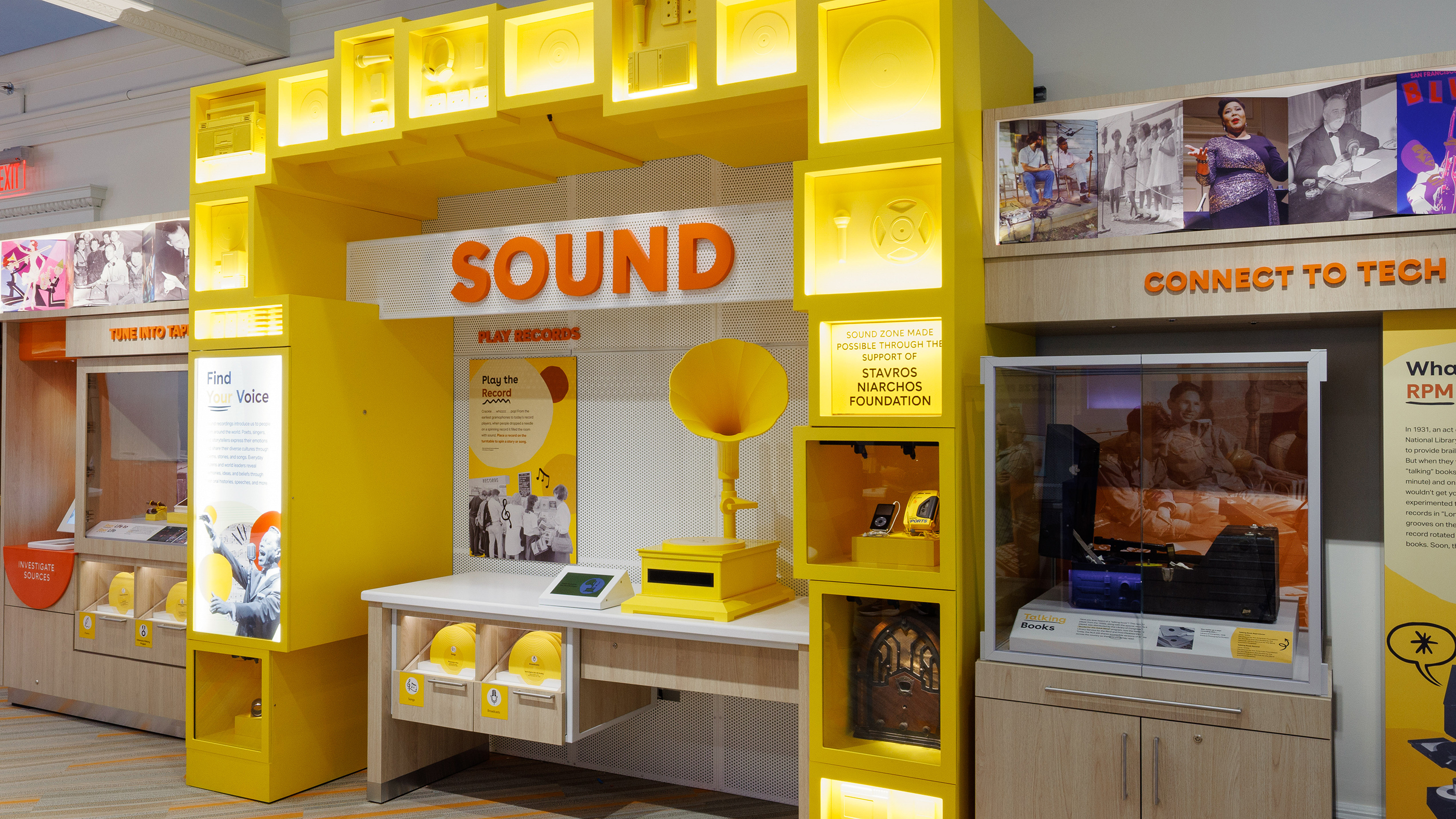
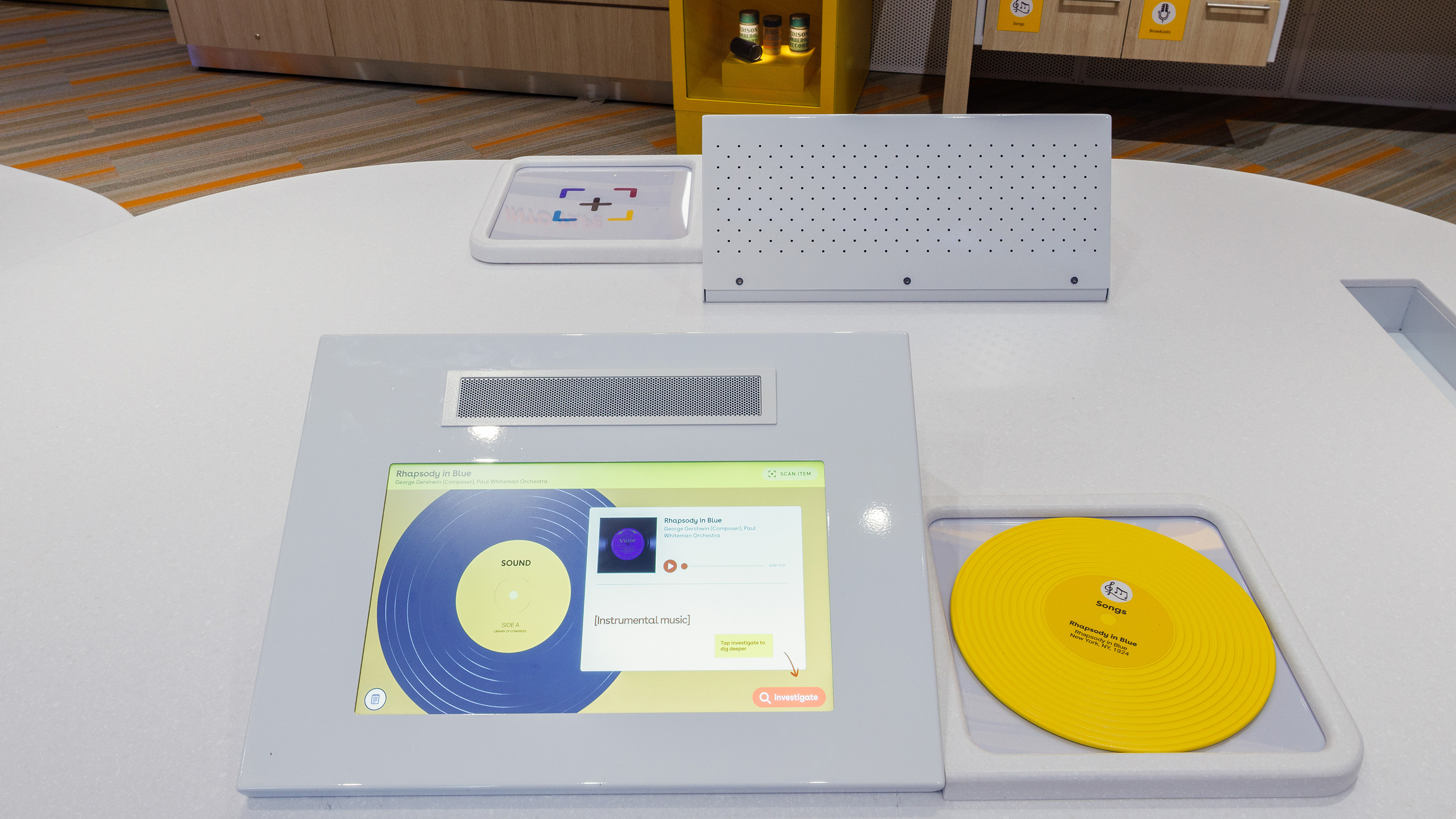
Kids can drop a record on the oversized player and the audio rises out of the phonograph horn while the words scroll on a screen beside it, captioned start to finish: Rhapsody in Blue, Take Me Out to the Ball Game. To go deeper, kids scrub the record back and forth like a DJ to find the exact moment they want.
Here the reward is in looking closely. Kids move a digital magnifying glass across a historic photograph, and annotations surface wherever they zoom in: a daredevil’s perilous ride, surfers off the coast of Honolulu.
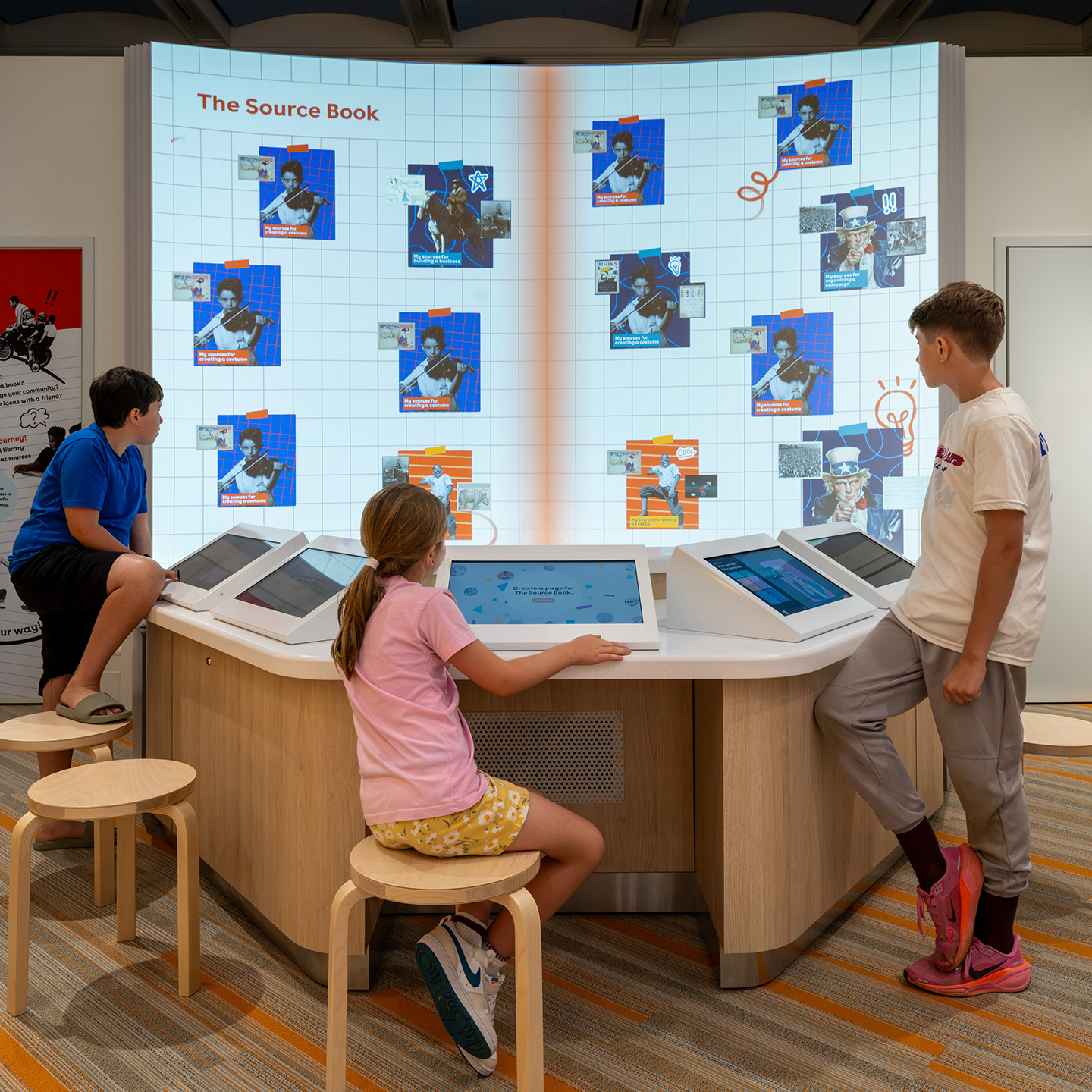
The last stop is the Source Book, a projected wall of collages made by every kid who has come through. At one of five stations, visitors build their own collage from images they met across the gallery, then set an intention for what they want to learn next. When they finish, their collage joins the wall and stays there: their first piece of research, on display at the Library of Congress.

The letter that started all of this asked a fair question: why wait? Today, kids don’t have to.