Most enterprises rely on a familiar set of tools to drive growth.
We explain value in decks. We walk through it in demos. We reinforce it in meetings. These approaches are effective and necessary. They form the foundation of how businesses communicate, sell, and scale.
But on their own, they have limits.
In complex, competitive markets, it’s not enough for customers to understand what you offer. They need to see where it fits, why it matters to them, and why it’s different in a way that is clear and lasting.
An untapped growth opportunity
There is a proven strategy that can unlock stronger relationships, lasting brand loyalty, cross-selling and upselling opportunities, and accelerate sales cycles. That sounds like a heavy lift, but in fact, it can be achieved through the transformative work of an experience center.
For some, that might sound too good to be true, especially if experience centers can’t get traction because of the perceived challenges they face out of the gate, whether that’s the significant capital investments required, or if it’s the sheer manpower, often requiring specialized teams and resources to operate and maintain them. Such challenges fuel CFO skepticism about potential returns on these major investments.
For many enterprises, this is unknown territory, making it easy to dismiss an experience center as a pipe dream without proven results. Yet in industries where competition is fierce, margins are razor-thin, and brand loyalty and IP are the secret sauce, experience becomes a differentiator.
Enterprises that see the measurable growth from experience centers know this: immersive experiences are no longer a luxury – they are the new table stakes required to gain a competitive advantage.
Why immersive experiences win
Executives don’t want to sit through another video meeting, watch another product demo, or be held captive to standard business pitch decks. Until recently, this was one area where standard operating procedures were in dire need of an innovative approach.
A shift to high-touch, in-person experiences that get supported with white-glove hospitality and entertainment is the opposite of attending another meeting, pitch, or quarterly business review.
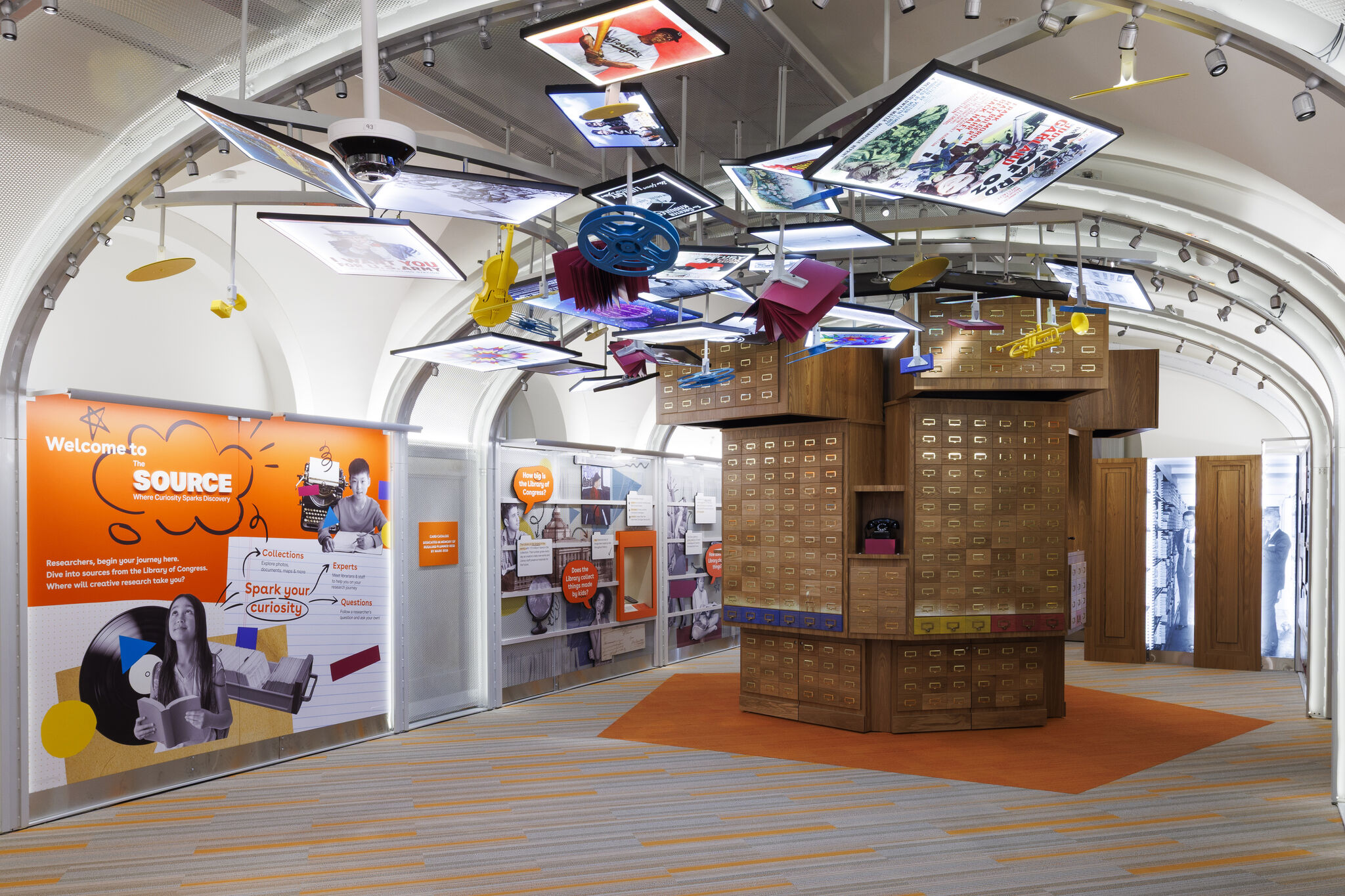
Immersive and interactive experiences get decision-makers out from behind the conference room table and into new environments where they are engaged and using hands-on prompts, moving and navigating their way through a thoughtfully curated experience.
Companies like Disney have long understood that immersive storytelling creates emotional connection and lasting loyalty. The same principles apply in enterprise environments:
- Action is needed. Research from the American Alliance of Museums shows that visitors recall up to 40% more details when they engage with interactive exhibits. Interactivity creates “light bulb” moments that resonate with audiences and leave them with more concrete experiences.
- Mine the emotional element. Experiences that provoke emotional responses help create memories; it’s how we’re wired at a neurological level. Experience centers deliver brand and product stories in ways that can “make it real” and memorable for audiences.
- Assume they know nothing. Experiences help with internalizing key differentiators and offer exposure to a full portfolio through sensible and compelling storytelling. Often, it leads to awareness of products and services that weren’t previously on their radar, which opens up expanded opportunities, ongoing value, and continued trust in your brand.
A new benchmark
Microsoft recently opened Experience Center 1 (EC1) at its Global headquarters in Redmond, WA, and it is the new crown jewel of its campus. While Microsoft has been championing in-person, immersive experiences for more than 30 years, EC1 is now the pinnacle of its global customer engagement program. As a rule, Microsoft’s top 500 strategic accounts are meant to make the pilgrimage to EC1 at least once a year.
This is leadership doubling-down on experiential engagement as a growth strategy.
By establishing this new benchmark for enterprise experience centers, Microsoft isn’t betting on a hunch or an emerging trend. They’re building upon decades of commitment, and understanding that time spent in-person with clients builds relationships, creates and deepens loyalty, and generates new pipelines.
Consider this – Microsoft is the company behind Teams and PowerPoint, yet it recognizes in-person engagement as a non-negotiable. They don’t lean on their branded tools in facilitating their most important relationship-building. That’s a signal worth paying attention to.
Experiences by the numbers
For CFOs and leaders who still remain skeptical, these key findings reveal how enterprise companies are benefiting from their investment in experience centers. Results are from a 2024 Survey by the Global Association of Customer Engagement Professionals (GACEP).
- 84% of guests say their experience contributed to strengthening their relationship with the brand.
- 74% of purchasers said the amount of the purchase increased by an average of 31%.
- 72% of guests said the experience influenced their decision to purchase.
- 41% of purchasers said the experience shortened their purchase cycle by 30%.
- 79% of respondents said they discovered additional services or solutions that they had not known the host company offered, and that appear to be useful to their company.
There isn’t a singular strategy that is positioned to yield all of these desired outcomes except for an experience center. The data confirms the growing importance enterprise companies are placing on client retention and acquisition efforts in order to compete.
Hyperquake approach: strategy led, story driven
At Hyperquake, we believe in story as strategy. As one of my colleagues recently wrote, we dig deep with clients to define and design their enterprise story, which often involves unearthing the missing middle – the lost and unclear parts of the enterprise story between topline messaging and product specifications.
Once the story is clear, we create intentional audience journeys that are engineered to deliver critical information in ways that will resonate and be memorable. Every story point, every piece of technology, every sensory experience, literally everything we incorporate into an experience environment is designed to drive a specific outcome or action our client wants to inspire.
By understanding a brand’s unique identity, we create emotionally memorable moments that give audiences a reason to believe.
There’s a lot more to the story about how we build experiences and who we build them for. And like Microsoft, we’re not chasing a trend or building cool spaces for the sake of the awe factor. We’re accelerating a shift in enterprise engagement, and we’re actively partnering with enterprises to create competitive, on-brand platforms with unmistakable, long-term value.
For leaders evaluating experience centers, the question often comes down to ROI.
That’s the right question. It’s just often undervalued.
Time spent together with customers, in real environments, engaging with your business firsthand, is one of the most underappreciated assets in enterprise growth.
Experience doesn’t behave like a campaign or a discrete initiative. It operates across the entire growth system. It strengthens relationships, increases deal size, shortens sales cycles, and expands awareness of the full portfolio.
Few investments influence all of those variables at once.
At Hyperquake, we see experience as a strategic platform for growth. When story, environment, and interaction are aligned, customers don’t just understand the business. They internalize it. They see where they fit. They recognize value in ways that are immediate and lasting.
That shift is what drives momentum. It expands opportunity, accelerates decisions, and builds relationships that are harder to displace.
Customers don’t move because something was explained well. They move because they experienced something they believe in.