Your marketing team needs to sit with this hard truth: attempting to over-optimize ineffective content on the wrong platforms doesn’t work in your favor.
You know the pattern – target the audience and deploy the campaign, then analyze the data and refine the campaign on repeat, indefinitely. This kind of work among marketers today seems less geared to the studio and more suited for the lab with its labored attempts at optimization for the tiniest incremental gain. And it became this way because marketers were convinced this is the way.
For those desperate for another way, there is one – and it’s called co-creation. It isn’t new in a novel sense, but it is more relevant than ever.
Don’t mistake this as a trend and dismiss it. If you’ve read our recent perspective on the performance marketing treadmill, you know that customer acquisition costs are continuously rising, the conventional channels are oversaturated, and results are becoming harder to realize – not to overlook the challenge in asking for more budget when optimization to date isn’t performing as planned.
If the phrase everything old is new again has currency in this moment for marketing, then co-creation is the siren and signal – the needed break from chasing algorithmic and AI favor for something more authentic. And if there’s any emerging trend marketers need to be mindful of right now, it is growing audience sentiment around AI and anything perceived as inauthentic.
What exactly is co-creation?
Simply stated, co-creation is the art of involving your community, individually or collectively, to make stories that matter by celebrating their voices through your brand.
Don’t miss the authentic part: getting into communities and allowing honest and vulnerable voices to shape the stories that you tell.
This is the opposite of the lab mindset of optimizing and scrutinizing the data science – the trap marketers have been lured into, believing this is the investment that matters most. It even goes beyond the “art” in the studio, ensuring the current voice of the customer is heard and understood before campaigns are formed and deployed.
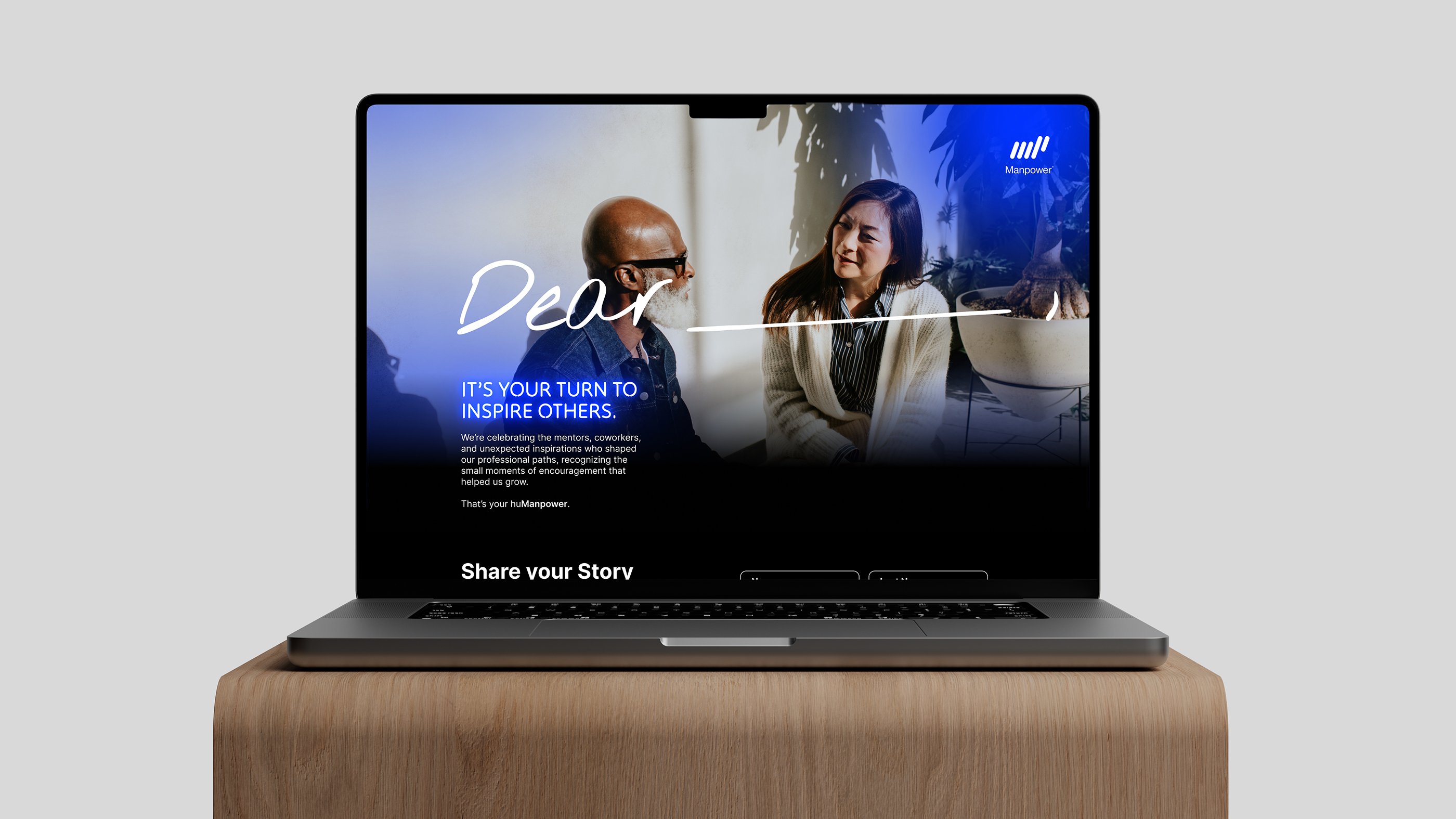
Recently, Hyperquake’s managing director shared our co-creation approach with Manpower and the initial result. But here’s what’s interesting – since then, what quickly gained traction in Italy now has momentum in France, the United Kingdom, and the United States. Manpower recognized this wasn’t a lather-rinse-repeat campaign (nor was it meant to be). They saw firsthand how localization – conversations and dialogue concentrated in a specific geographic area – revealed unique stories. Those stories informed each region’s campaign specifics. Across the four regions, Manpower amassed more than 2,000 unique stories of challenges and successes about individual career journeys – in essence, giving hope and encouragement to other jobseekers and fueling its #huManpower campaign.
Engagement fuels effectiveness
What Manpower saw in Italy with early consumer engagement was atypical of many marketing efforts, in part because they didn’t take a long wait-and-see approach. Instead this work was deployed in other markets while still performing in Italy, which means this work is already happening, at scale and right now, without the over-optimization and data analysis scrutiny.
What Manpower experienced unfolding in-market with their own eyes and ears was more compelling than a spreadsheet of results.
A combination of boots-on-the-ground work, long-term data evidence, and the client examples we shared proved that co-creation is more of a movement rather than a passing fad or trend on decline.
It’s like a supercharged word-of-mouth campaign any marketer would wish for, but instead of wishing, we created space to allow people’s truth to be told and gave it structure. That engagement becomes the fuel for the effectiveness to come.
Here’s the long-term data evidence worth knowing.
From approximately 9,000 campaigns analyzed by WARC since 2016:
- 70% of co-creation campaigns are built for brand-building, not just short-term sales
- Co-creation roughly doubles ROI and sales lift vs. non-co-created work
- UGC ranks as the #1 creative strategy for marketing effectiveness in their dataset
Audience context also matters – especially if skeptical leaders are overseeing the work or carefully doling out budget. Worse yet, gatekeepers might hold a belief that co-creation and personalization “feels like fluff.”
Again, some relevant data: Sparks & Honey, Exploring Personalization and Co-Creation (2023) reveals the interest in personalized/co-created experiences by generation.
- Gen Z: 53% – want to bring their stories into everything they do; strongest need for connection of any cohort
- Millennials: 45% — want to bring imaginary worlds to life; see public self-expression as default; most diverse/fluid generation historically
- Gen X: 32% — embracing crafting/DIY; more politicized and outspoken
- Boomers: 27% — want to stay "forever young"; status expressed through travel/culture
When nearly half of Millennials and Gen Z combined – the primary target audience of most brands today – lean into stories, self-expression, and desire to connect and community, it tells marketers that this isn’t just a strategic move, it’s a vital one because it’s identifying something much deeper.
Co-creation – fulfilling a need to belong
Establishing a sense of belonging and then inviting others in – that’s at the core of any co-creation campaign. Viewed another way, belonging tracks with our most basic needs and sits in the middle of Maslow’s Hierarchy of Needs (Love/Belonging comes after Physiological Needs and Safety Needs, and before Esteem and Self-Actualization).
That realization alone – delivering on genuine human need – begins to stir the marketing pot and run counter to marketing philosophies that have emerged as edicts in this digital age.
It’s what I call StoryMaking4Good, a process I’ve refined over the years and continue to evolve in Hyperquake’s co-creation practice. The need is real and co-creation can deliver on that need with measurable results.
Co-creation’s undeniable business case
When brands push pause and rethink why their marketing isn’t connecting, they’ll realize it’s because marketing isn’t literally and genuinely making human connections to tell stories. The hope is that the content machine will do that heavy lifting.
Getting boots on the ground can be a time and logistics expense, perhaps even more so for global brands – but the work can still move with pace. However, what brands cannot afford to do is ignore what each generation is craving in its own tailored way – a need fulfilled, a connection made, and a real sense of belonging. Meeting those needs without co-creation is an expensive proposition of guesswork.
Brand also shouldn’t be beholden to any content format. Intentional customer engagement that goes beyond UGC requires discipline, not one-off tactics. Finding the rhythms in and depths from co-creation will reshape the marketing strategy and its delivery channels. It’s the priority flip marketers need to make.
Lastly, the assumption that co-creation and personalization is a feel-good play and not serious, bottom-line business is not rooted in data. Arguably the ROI case for co-creation is stronger than what most marketing mix strategies are working with today.
I’ll sum up the value of co-creation in a single sentence:
Give a voice to your audience and you will positively impact behavior and drive growth.
That is marketing’s job – offering a reason to believe in the brand.
A belief that translates to brand loyalty and drives growth.
All of it activated by – Authentic. Human. Connection.
That isn’t marketing fluff or wishful thinking. If it were, companies such as Manpower, Elle, Hershey’s, Nescafé and others wouldn’t be buying in.
What they’ve experienced is needle-moving results, giving them proof and reason to humanize growth instead of trying to optimize approaches that are barely budging.
So now consider sitting with this:
Your best optimization strategy might be to opt out of what’s not working.
Co-creation rebalances priorities, reminding every marketer that it’s not the channel that drives outcomes, it’s the people and the work you create together.


.avif)